
New NSO statistics show that St Paul’s Bay, once a quiet seaside town, has continued to grow significantly in population, reaching a staggering 38,615 residents this year.
St Paul’s Bay registered a year-on-year increase of more than 3,000 residents or a 9 % rise.
According to the new figures for Malta’s estimated population on 1 January, most residents of St Paul’s Bay are now foreigners, third-country nationals residing in Malta for work purposes, representing the largest segment of the town’s population.
The NSO data shows that Malta’s population continued to increase significantly. In two years, Malta’s population surged by more than 40,000.
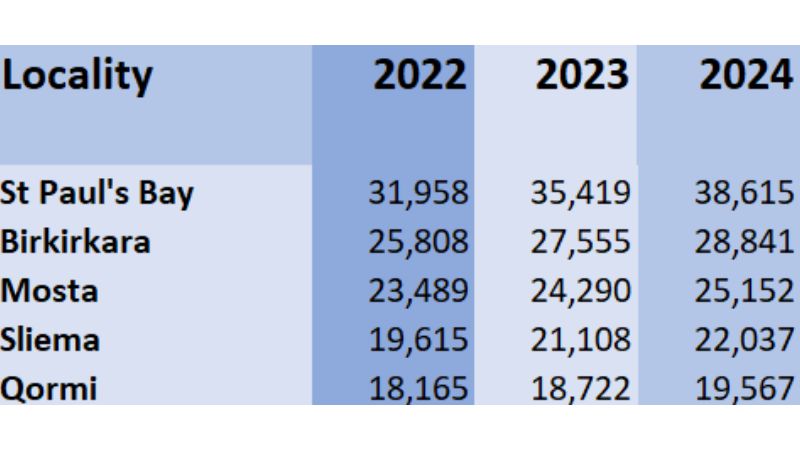
Apart from St Paul’s Bay, almost all of Malta’s towns and villages registered an increase in residents, with the only exceptions being Mdina, Birgu, Luqa, Mtarfa, and Gozo’s San Lawrenz.
The most significant population increase was registered in St Julian’s for the second year in a row, with the population now reaching 14,524, an increase of over 10% in a year.
Msida has also shown an increase of more than a thousand new residents in a year, reaching 15,815.
This growth spurt is also spilling into the neighbouring Tal-Pieta, reaching a population of 6,901, an 8% increase over the last 12 months.
Due to government decisions, Malta has experienced unprecedented rapid population growth during the past decade.
This increase has made Malta’s economy dependent on numbers, creating major problems in a small island’s infrastructure and health services, among others, as the government failed to keep up with the investment necessary to adjust to this new reality.
OHSA has no idea of how many tower cranes are operating in Malta

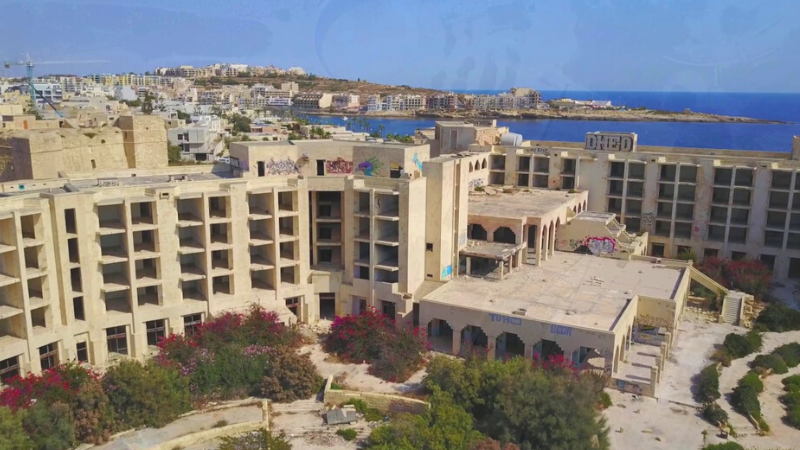
‘Tal-Bamboċċu’ demands payment from developers over Jerma Palace deal

Prime minister cites new excuse to keep asset declarations secret

Opinion: Debt rising, truth falling – Caruana’s misleading claims

Sign up to our newsletter Stay in the know
"*" indicates required fields
Tags
#migration
#National Statistics Office
#population growth
Related News
OHSA has no idea of how many tower cranes are operating in Malta
‘Tal-Bamboċċu’ demands payment from developers over Jerma Palace deal
Prime minister cites new excuse to keep asset declarations secret
Opinion: Debt rising, truth falling – Caruana’s misleading claims

Embarrassment as Malta fails to reach European higher-education standards
Health minister’s former trainee sits on FMS board that employs him
Authorities consider changes to planning rules to override court decision on Ta’ Xbiex restaurant

Payments to failed €55 million project contractor kept under wraps
Opinion: Byron Camilleri’s mess
Tax chief fails to fill €29,000 legal role, hands €78,000 contract to former minister
Bunkering association calls for observation of rules among Maltese players